.jpg)

Lorem ipsum dolor sit amet, consectetur adipiscing elit. Suspendisse varius enim in eros elementum tristique. Duis cursus, mi quis viverra ornare, eros dolor interdum nulla, ut commodo diam libero vitae erat. Aenean faucibus nibh et justo cursus id rutrum lorem imperdiet. Nunc ut sem vitae risus tristique posuere.
You've been asked to plan the team event. You've Googled "team building event ideas" and found the same fifteen suggestions on every site — escape rooms, cooking classes, pub quizzes — with no guidance on what actually works for different kinds of teams.
This guide covers the formats we see work consistently, the ones that tend to fall flat, and the decisions that determine which option is right for your team right now. Whether you're planning for 20 people or 200, a half-day or a full off-site, there's a format here that fits.
What Makes a Great Team Building Event? (Three Quick Criteria)
Before diving into formats, it's worth being clear on what you're actually trying to achieve — because most team building events underdeliver not because the activity was wrong, but because the brief was too vague.
Three criteria separate the events people talk about for months from the ones they've forgotten by Tuesday:
It has a clear purpose beyond "fun." The strongest briefs name a specific goal: breaking down silos between two departments, reconnecting a distributed team who rarely meet in person, integrating a wave of new starters, or rebuilding energy after a difficult period. Fun is a side effect of a well-designed event, not the brief itself.
It creates genuine interaction, not parallel participation. Activities where people can complete tasks independently — without actually needing to collaborate — don't build teams.They entertain them. A format that puts people in genuine interdependence(competing on a live scoreboard, solving a problem that genuinely requires multiple perspectives) produces something different.
The programme has a logical flow. A morning activity followed by an evening dinner only works if there's a thread connecting them. The best events are designed so each phase builds on the previous one: energy from the activity carries into the social time; the social time cements connections made during the challenge. Without that structure, you get two separate things that happened on the same day.
13 Team Building Event Ideas (By Format)
Active and Outdoor
1. GPS city treasure hunt
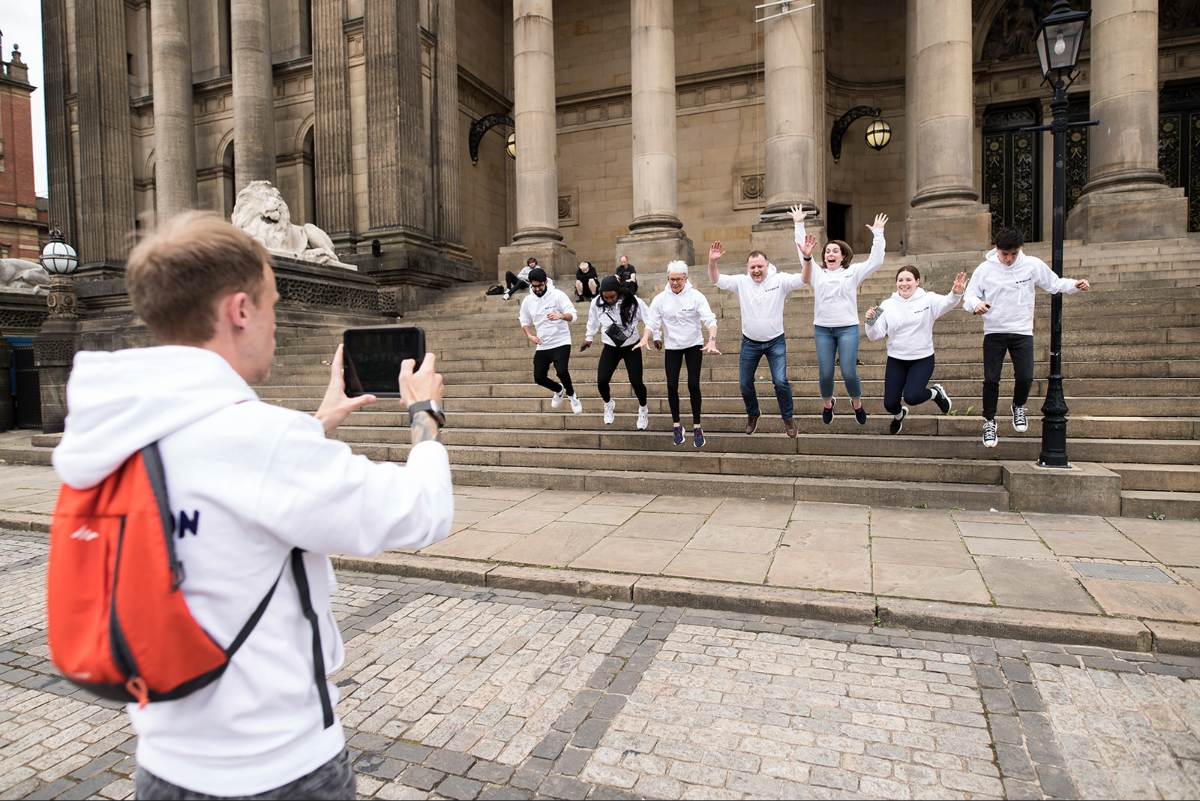
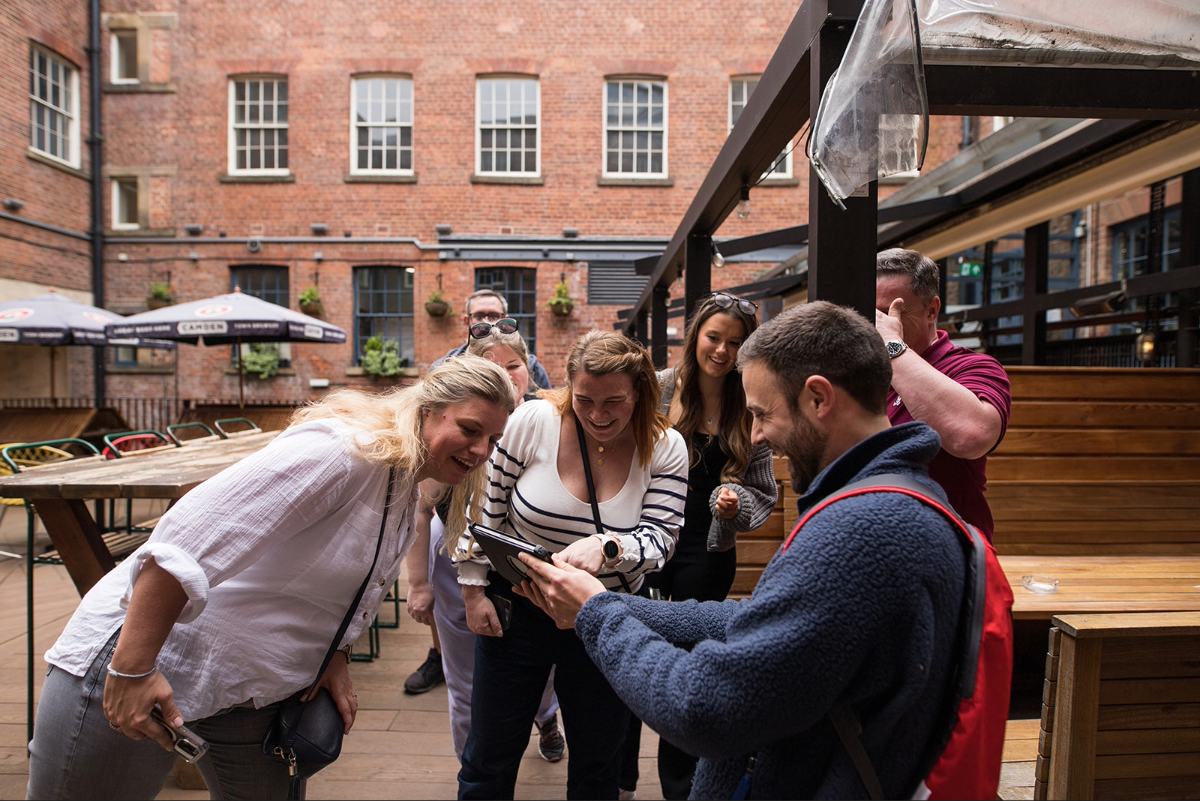
Teams use GPS-enabled devices to navigate an unfamiliar city, solving challenges, discovering locations, and competing on a live scoreboard. One of the most consistently effective formats for distributed or remote teams — it creates genuine interdependence from the start. We ran this format for a remote workforce in Leeds — read our team building day case study. By the halfway point, people who had never met in person were genuinely invested in their team's position on the leaderboard. Budget: £45–£75 per person.
2. Urban adventure race
A more physically demanding version of the city challenge format: teams complete physical tasks, logic puzzles, and navigation challenges across a park or city district. Works well for younger or more active teams; less suitable for groups with significant fitness or mobility variation. Budget: £55–£90 per person including facilitators and equipment.
3. Cooking competition
Teams are given identical ingredients, equipment, and a brief — and compete to produce the best dish in 90 minutes. A professional chef judges at the end. Works well as a half-day activity paired with a sit-down team lunch from the results. Budget: £65–£100per person.
4. Wilderness survival skills day
A facilitator-led session covering navigation, fire-lighting, shelter-building, and basic foraging. Unusual enough to prompt genuine engagement from teams where conventional formats feel tired. Best suited to smaller groups (up to 30). Budget: £80–£130 per person.
Creative and Workshop
5. Cocktail masterclass with a competition
A mixologist teaches teams to make three or four signature cocktails, followed by a judged competition on taste, presentation, and improvised pitch. Low physical demands, universally social, works across almost every team type. Budget: £45–£70 per person.
6. Collaborative art project
Teams work with a professional artist to produce a large-scale piece — a mural, mosaic, or installation — that gets displayed in the office. It leaves something tangible behind, which helps the event land beyond the day itself. Budget: £60–£110 per person including materials and artist facilitation.
7. Cuisine-based cooking class
Different from the competition format: a chef leads teams through cooking a specific cuisine together, and the group eats what they've made. Lower stakes than the competition version —better suited to teams that need a more relaxed, social format. Budget: £65–£95per person including a full meal.
Competitive
8. Escape room experience
Teams solve a sequence of puzzles to "escape" within 60 minutes. Works well for groups of six to ten per room; book multiple rooms simultaneously and run a combined debrief forlarger groups. Budget: £25–£40 per person — one of the most cost-effective formats on this list.
9. Corporate innovation sprint
Teams are given a genuine business challenge — a product problem, a customer experience to redesign, aprocess to improve — and present solutions to a panel at the end of the day. Budget varies: £0 if run internally, £40–£80 per person with a professional facilitator. Particularly effective for leadership offsites and cross-functional teams.
10. Murder mystery dinner
A scripted investigation plays out over a three-course meal, with a facilitator or actor in the lead role. Teams present their theories at the end. Works well as an evening format and can accommodate a wide range of team sizes. Budget: £55–£85 per person.
11. Crystal maze-style multi-zone challenge
Teams rotate through physical, skill, mental, and mystery zones at a dedicated venue. Delivered by specialist providers and scalable for groups of 20 to 200. High production value, strong energy, minimal planning required on your side. Budget: £50–£95 per person.
Social and Culture-Building
12.Volunteering day
Teams spend a day on a community or environmental project: renovating a youth centre, packaging food donations, planting trees, or working with a local charity. Consistently the highest-rated format for teams where "fun" activities feel forced or corporate. Budget: £20–£60 per person in coordination and materials costs — often lessexpensive than activity-based formats.
13. Live music creation workshop
Led by professional musicians, teams write, record, and perform an original track within a few hours. Works even — especially — for people who insist they're not musical. Budget: £70–£110per person.

Choosing the Right Format for Your Team
The activity alone doesn't determine whether a team event works. Here's a quick decision framework:
Remote or distributed team? Prioritise formats that put people in a genuinely unfamiliar situation together — city treasure hunts, outdoor activities, or intensive workshops. Familiar formats are easier for people to opt out of emotionally; a genuinely new environment forces real engagement.
Establishedin-office team? Creative and workshop-based formats tend to produce more depth than novelty for teams that already knoweach other socially. An improv workshop or innovation sprint delivers more thananother competitive activity.
Large group(50+ people)? Avoid any format that requires the whole group's attention simultaneously. Competitive formats with a proper scoring mechanism, or social formats that allow natural clustering, work best at scale.
Budget under £50 per person? Escape rooms, improv sessions, volunteering days, or a well-designed internal challenge are the strongest options in this range.
Budget £50–£100per person? City treasure hunts, cooking competitions, cocktail masterclasses, and most half-day activity formats sit comfortably here.
Budget above £100 per person? Full away days, multi-venue programmes, and overnight formats open up.
How to Make It Memorable (NotJust Fun)
The difference between a team event that people talk about for months and one they've forgotten by the following Monday is almost never the activity itself. It's the design around it.
Intent shapes the experience. When people understand why they're doing something — even in broad terms — they engage differently. Framing the day as "we're investing in this team because we're going into a hard quarter together" produces different energy than "HR has organised a fun day."
Moments of genuine surprise. Planned spontaneity sounds like a contradiction, but the events that land hardest tend to include at least one moment nobody saw coming: an unexpected twist in the activity, a recognition element, something that makes it clear someone thought carefully about this specific group.
Something that outlasts the day. The Casio away day we designed at Easthampstead Park was built around a strategic session alongside the teambuild — the day produced shared experience and actual decisions the team couldpoint to afterwards. Even simpler versions work: a photo wall in the office, a collaborative art piece on the wall, or a team manifesto written during aworkshop session.
A properclose. Events that simply stop —activity ends, people head home — embed less deeply than events with a facilitated close. Even a fifteen-minute debrief that invites people to share one observation from the day changes how the experience settles.
Next Steps: Working with a Team Events Agency
Planning a team event is one of those tasks that looks straightforward until you're in the middle of it —coordinating suppliers, managing dietary requirements, handling the venue, and still trying to make sure the day actually achieves something.
If you'd rather not manage that yourself, that's what a team events agency is for. We handle everything fromthe initial brief to on-the-day delivery, and we bring enough experience of what works — and what doesn't — to push back when a format isn't right for your team.
Planning a team event in London? We handle everything from concept to delivery. Get in touch for a no-obligation conversation.
hello@stackedevents.co.uk
020 8050 1903